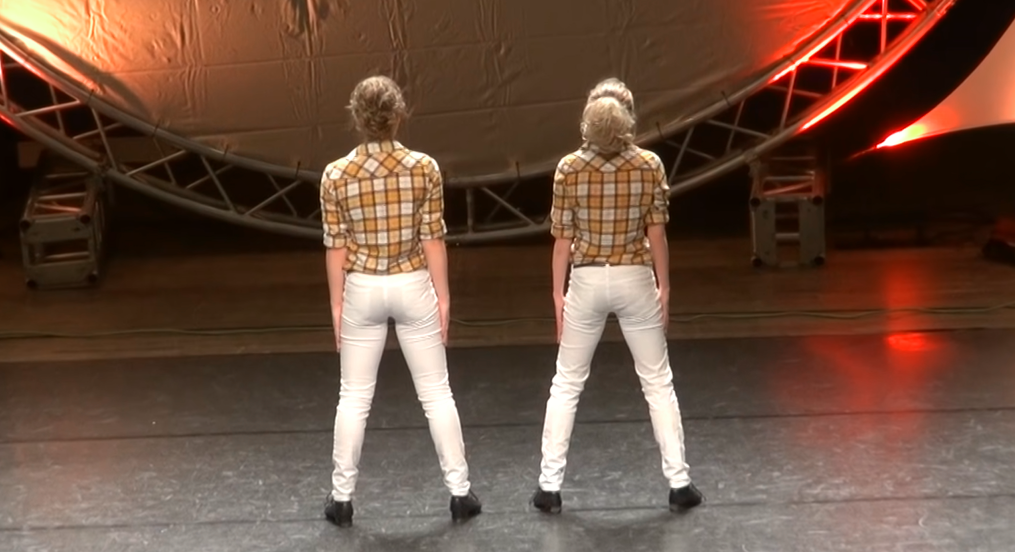
In an unforgettable performance, two young dancers, Morgan and Madison, took the stage dressed in white pants and plaid shirts. With their backs turned to the audience, they waited for the music to start. The moment the first notes played, they spun around and launched into an incredible display of footwork that left the judges and audience in awe.
As soon as they began, the crowd erupted in cheers and applause. The girls’ movements were perfectly synchronized as they weaved in and out of their clogging routine, creating a mesmerizing spectacle. It was clear that their performance was the result of countless hours of hard work and practice.
The Origins of Clogging
Clogging, often confused with tap dancing, has a rich history rooted in European folk dances brought to the United States by English, Irish, and Scottish settlers in the 1700s and 1800s. Unlike the common misconception of Dutch girls wearing wooden clogs, American clogging evolved in the rural Appalachian Mountains. Today, it remains close to its traditional roots and is the official state dance of Kentucky and North Carolina.
The key differences between clogging and tap dancing lie in the footwear and technique. Cloggers wear shoes with metal pieces over the toe to produce unique sounds, and their routines often incorporate more heel steps. In contrast, tap dancers primarily perform on the balls of their feet.
Clogging in the Spotlight
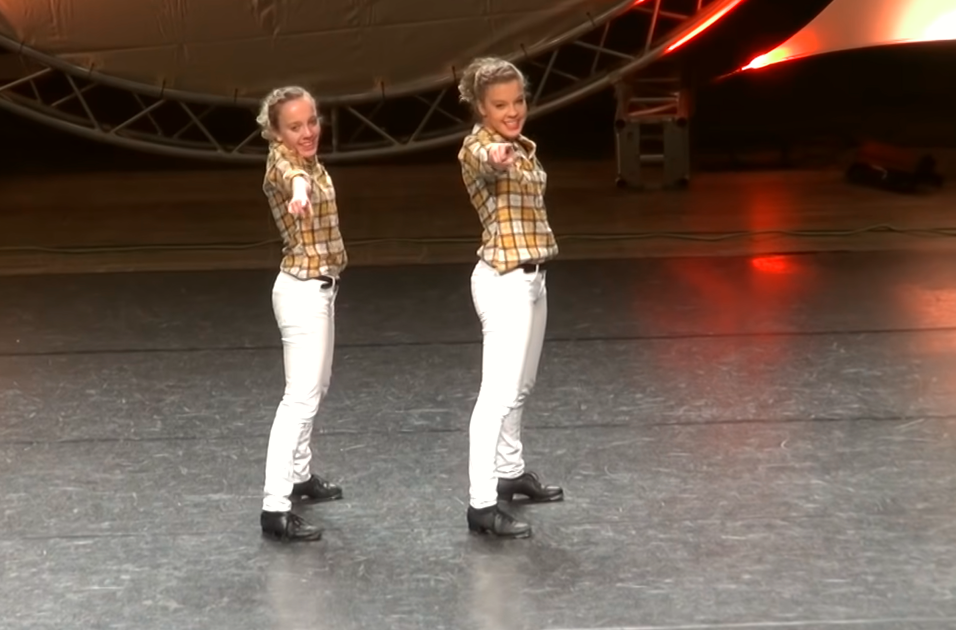
Clogging has been gaining popularity in the United States, with competitive events attracting talented dancers from across the country. One such event, the Showdown of Champions in Knoxville, TN, became the stage for Morgan and Madison’s viral performance. Their fast-paced routine to Keith Urban’s “Hit the Ground Runnin’” was a perfect match for their energetic style.
This performance not only showcased their remarkable talent but also brought renewed attention to the art of clogging. The intricate footwork, rhythmic precision, and dynamic energy displayed by Morgan and Madison captivated everyone who watched, highlighting the enduring appeal and evolving nature of this traditional dance form.
More About Clogging
Clogging, a percussive dance style, has roots in various European folk dances. It arrived in the United States through settlers from England, Ireland, and Scotland. The dance is characterized by rhythmic footwork and is traditionally performed to bluegrass or country music. Over time, clogging has incorporated elements from other dance styles, including tap and hip-hop, allowing it to stay relevant and exciting for new generations of dancers.
Competitive clogging, as seen in events like the Showdown of Champions, has helped bring the dance form into the mainstream, inspiring many young dancers to embrace this vibrant and energetic style. Performances like Morgan and Madison’s serve as a testament to the hard work, dedication, and passion that clogging requires, continuing to inspire audiences worldwide.