
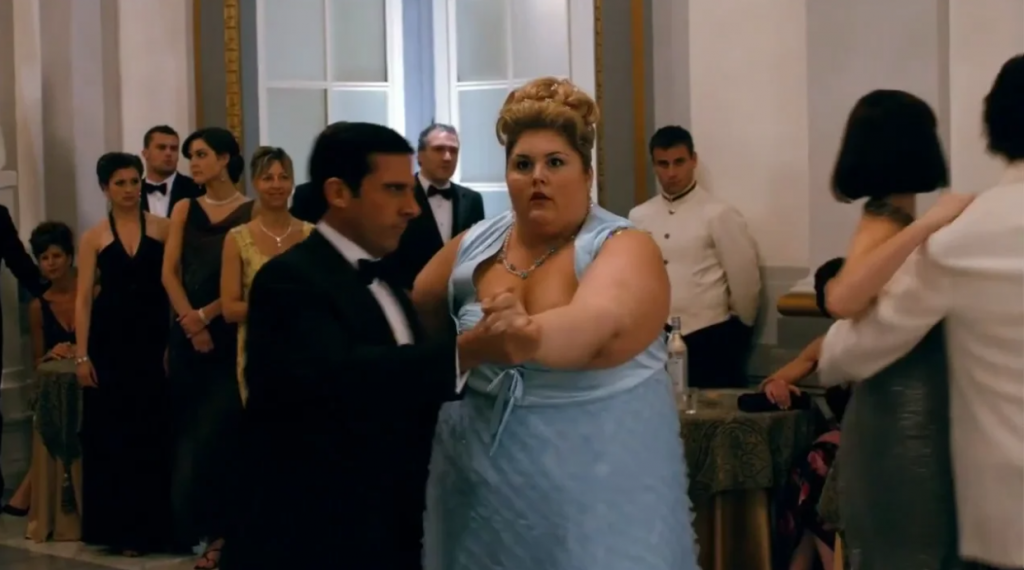
In a scene that resonated with millions, a man waded through a crowd of skeptical onlookers, scanning for a dance partner. Ignoring the sneers and superficial standards, he reached out to a plump girl — the very one others had ridiculed. But the moment their feet hit the floor, something extraordinary happened: she danced with grace, passion, and undeniable talent. In that instant, the laughter stopped. She wasn’t just good — she was the best in the room.
This scene, featuring Steve Carell, became a quiet cultural milestone. It reminded viewers not to judge by appearances — a message echoed throughout film and beyond. It’s a lesson as timeless as it is vital: what’s inside matters more than what’s on the outside.
This sentiment is at the heart of many performances and career decisions made by actress and writer Lindsay Hollister. Perhaps best known for her controversial role in Blubberella, a satirical superhero movie directed by Uwe Boll, Hollister has long navigated the often-cruel intersection of size and visibility in Hollywood. “At least I was in on the joke,” she said in a 2011 interview, adding that writing her own dialogue gave her power over the narrative. While the film received a dismal 12% on Rotten Tomatoes, Hollister took away something more valuable than a good review: ownership.
In a world obsessed with appearances, especially in the entertainment industry, Hollister’s resilience and self-determination are refreshing. “Kids are killing themselves,” she remarked candidly. “They need to know they’re not alone.” Her upcoming horror-comedy, set in a fat camp, aims to tackle those painful truths with heart, humor, and hard-earned wisdom. It’s currently in development with United Talent Agency.
Hollister also draws inspiration from fellow groundbreaking figures in entertainment. Melissa McCarthy, for instance, is one of Hollywood’s most bankable stars — yet often goes uncredited for her impact. Hollister recalls auditioning for This Is Us, only to be told she was “too small.” The irony stings, but it also motivates.
Her entrepreneurial spirit is alive in the Pie Hole, a creative venture, and in her behind-the-scenes work as a writer and producer. Hollister is not just carving out a space for herself — she’s paving the way for others.
Even high-octane scenes, like the five-minute skydiving sequence in Get Smart, show the dedication of those involved. Shot over 70 real jumps at sunrise and sunset to maintain perfect lighting, the scene — led by expert skydiving cinematographer Norman Kent — illustrates the painstaking effort that goes into creating cinematic magic. Agent 99, originally played by Barbara Feldon, was even invited to appear but reportedly declined.
What ties all of these moments and people together — from a single dance scene to a fat superhero battling Nazis — is a core message: real power lies in authenticity. When someone dares to be themselves, especially in the face of ridicule or doubt, they open the door for others to do the same.
So, next time you witness a moment like that dance — where someone unexpected steals the spotlight — remember it’s not just entertainment. It’s a reminder. Talent doesn’t come in a single shape or size. Courage doesn’t wear one face. And greatness often comes from those brave enough to be underestimated.